Wedding entertainment: a DJ, a live musician or a band?
Short answer
Choose your entertainment based on what you want your guests to remember: a DJ gives you range and a long night on the dance floor, a band puts on a real show, and a live musician suits the ceremony, drinks reception and dinner. Book early, check with the venue and make sure times, sound and overtime are in the agreement.
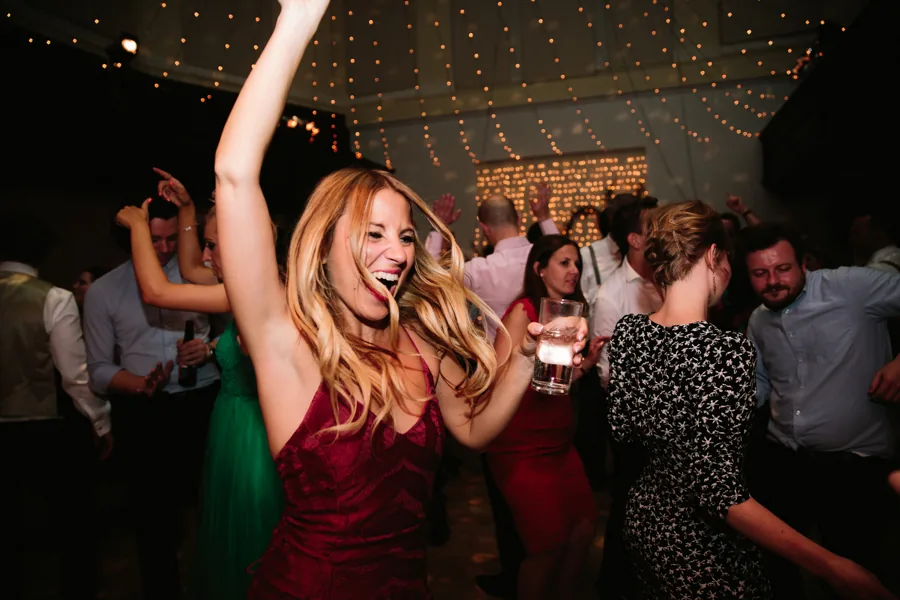
The entertainment is one of the few things at a wedding that every guest experiences at the same time. It decides whether the drinks reception feels relaxed, whether the speeches can be heard and whether the dance floor fills up or stays empty. And the choice isn't easy: should you have a DJ, a live musician, a band or a combination? This guide helps you choose, and goes through everything that needs to be in place before you book.
Start with the day, not the artist
Before you compare artists, decide what the entertainment needs to do. Do you want music during the ceremony? Live music for the drinks reception? Is the dancing the highlight of the evening, or are dinner and the speeches what matter most? Write down which parts of the day need music and roughly for how long. You'll immediately see what kind of entertainment you need, and you can give artists a clear request. In our guide to your wedding music, we go through each part of the day step by step.
A DJ, a live musician or a band?
| Best for | Strength | Bear in mind | |
|---|---|---|---|
| DJ | The party and the dance floor | Plays exactly what the crowd wants, all night long | Choose a DJ with experience of weddings and mixed-age crowds |
| Live musician | Ceremony, drinks reception and dinner | Personal and intimate, takes up little space | A singer, saxophonist or troubadour is rarely enough for a whole night of dancing |
| Live band | The highlight of the evening | Energy and an experience guests remember | Plays in sets with breaks and needs more space, power and sound |
DJ
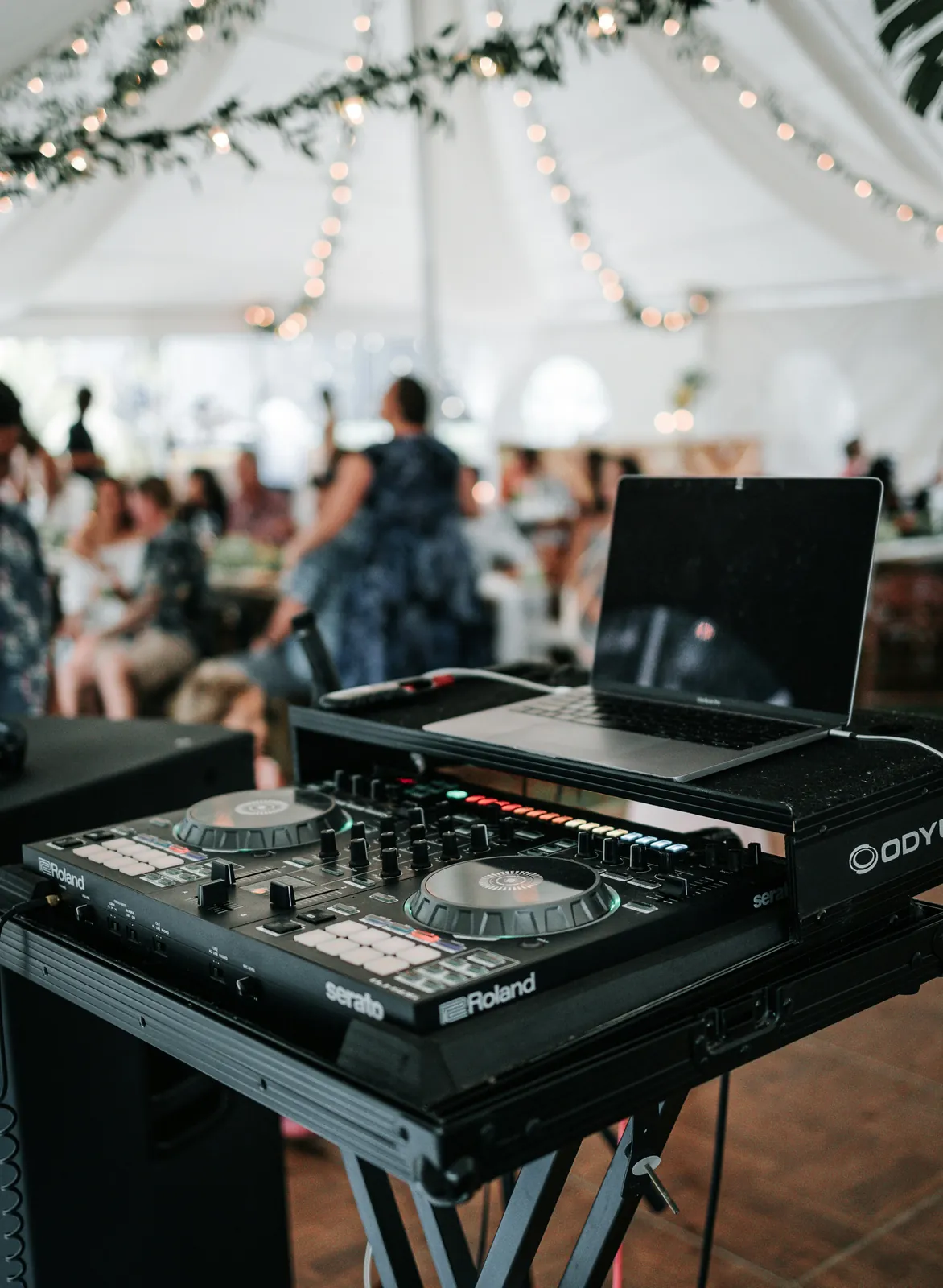
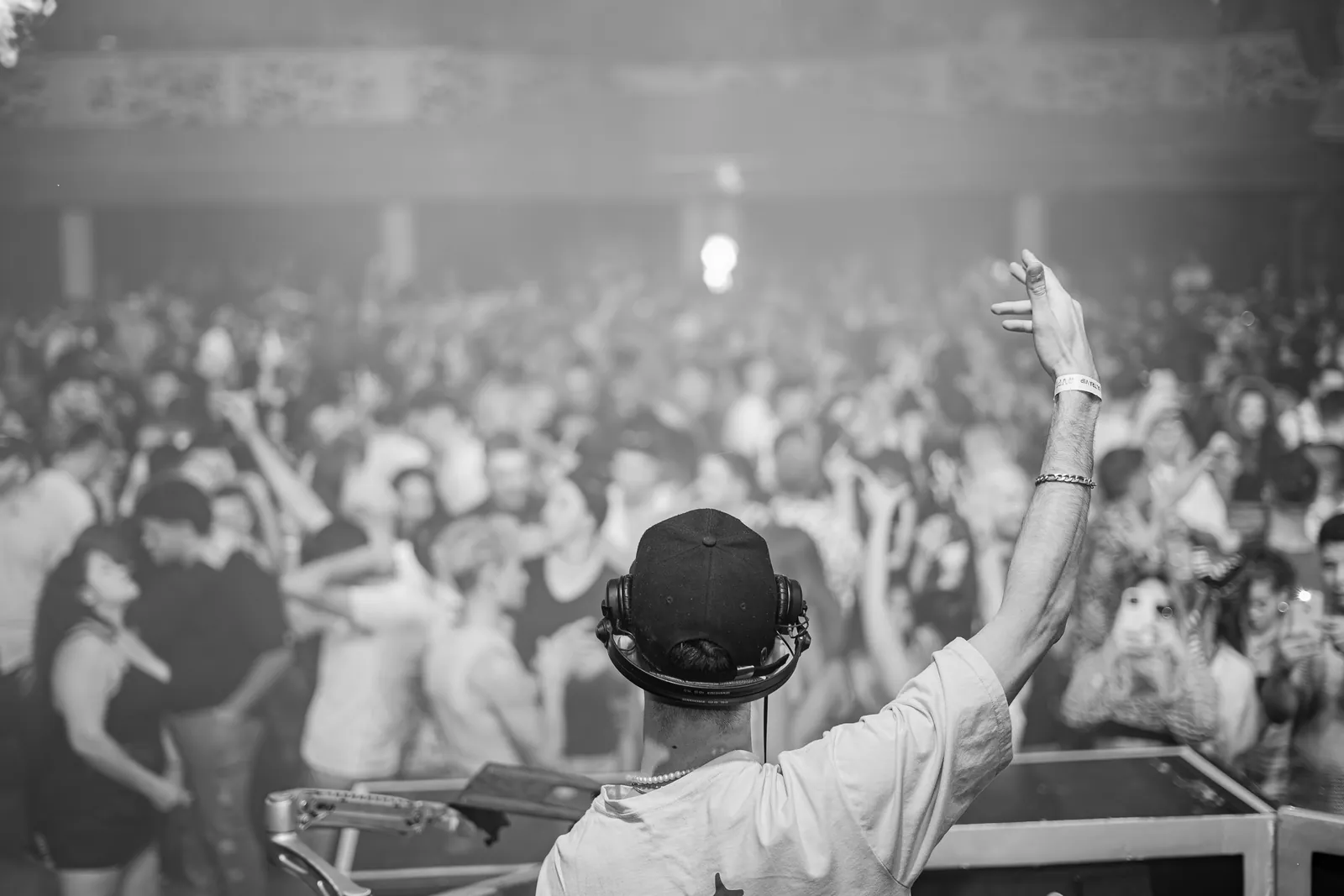
A DJ gives you the most range for your money. They can play gently during dinner, take care of the first dance and then build up the dance floor at whatever pace your guests want. The key is that the DJ has wedding experience, where the crowd ranges from children to grandparents and speeches and games interrupt the music.
Live musician
A singer, saxophonist, guitarist or troubadour (an acoustic singer-guitarist) makes the ceremony and drinks reception more personal. A song that means something to you, performed live as you walk in, is hard to replace with a recording. A live musician also takes up little space and needs little sound, which suits churches, gardens and smaller venues. A saxophonist playing alongside the DJ is also a popular way to give the dance floor something extra.
Live band
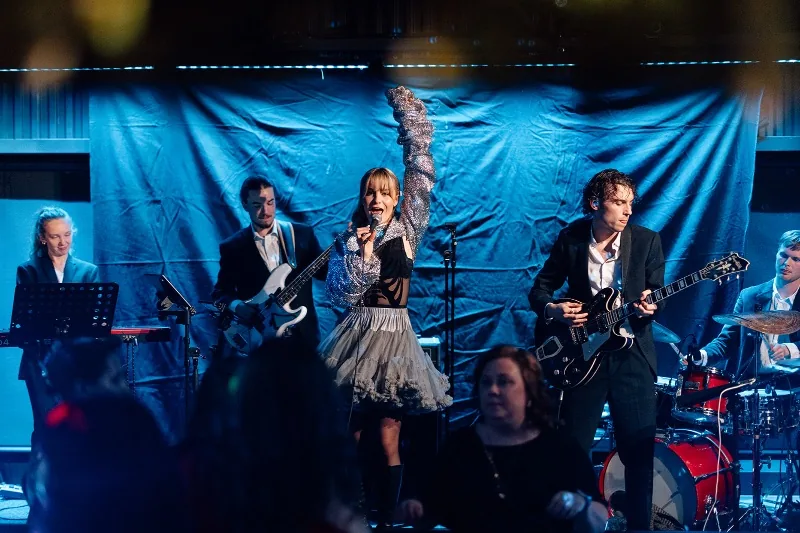
A band brings an energy few others can match and is often what guests talk about afterwards. On the other hand, a band plays a limited number of songs, in sets with breaks in between, and needs more space, more power sockets and a bigger sound system. Check that the venue can handle it before you book.
Mix and match for different parts of the day
Many couples don't pick one option but combine them. A common format is a live musician for the ceremony and drinks reception, and a DJ for dinner and the party. Another is a band playing two sets after dinner, with a DJ taking over when the band finishes. Combinations cost more, but give each part of the day the right feel. Try to book the artists in the same request, which makes it easier to coordinate times and sound.
How much does wedding entertainment cost?
A professional DJ and a troubadour usually cost SEK 6,000–15,000 per night, and a live band usually SEK 15,000–40,000. Weddings often land at the upper end of those ranges, because they tend to fall on peak-season Saturdays, run for a long time and need more planning. Sound, lighting, travel and overtime may be added. Read more in our guides to what a DJ, a troubadour and a live band cost.
Check with the venue
The venue often sets the limits for the entertainment. Ask whether there's a sound system and a microphone, whether there's a noise limit or a time when the music has to be turned down or off, and when the artist can get in and set up. Also ask where the dance floor and stage will be, and whether there's power nearby. If the ceremony or party is outdoors, you'll need more sound, and often a backup plan in case of rain. If you need to hire sound yourselves, we have a guide to hiring speakers for a party.
What the agreement should cover
- Date, address, arrival time and playing times for each part of the day.
- Price and what's included: sound, lighting, microphone and music between sets.
- The overtime rate, because weddings almost always run late.
- How and when payment is made.
- What happens if the artist falls ill or the wedding is moved.
When you book through Jocky, the agreement is created in the platform and invoicing is handled there, so everything is in one place.
Coordinate with the toastmaster
On the wedding day, the toastmaster keeps track of the timings, and the artist needs to know who that is. Send a schedule to both the toastmaster and the artist, with times for the ceremony, drinks reception, dinner, speeches, cake and first dance, and make sure they have each other's phone numbers. Agree who gives the signal when it's time for the first dance and when the music should come down before a speech. That way you don't have to keep an eye on things during the evening and can focus on your guests.
Ready? Book a DJ, book a live band or book a troubadour on Jocky. Also read what to consider when booking a DJ.
Frequently asked questions about wedding entertainment
Which is better for a wedding, a DJ or a band?
It depends on what you want. A DJ gives you the most range and can keep the dance floor going all night for a lower price. A band puts on more of a show but plays in sets and needs more space and sound. Many couples combine the two, for example a band after dinner and a DJ afterwards.
How much does wedding entertainment cost?
A professional DJ or troubadour usually costs SEK 6,000–15,000 per night and a live band SEK 15,000–40,000. Weddings often land at the upper end of those ranges, and sound, lighting, travel and overtime may be added.
When should you book entertainment for your wedding?
Book as soon as the date and venue are confirmed. Summer Saturdays are the most popular wedding days, and good DJs, artists and bands get booked up early. The earlier you book, the more choice you have.
Do you need live music for the ceremony?
No, but it often makes the moment more personal. A singer, guitarist or saxophonist takes up little space and works both in a church and outdoors. The alternative is for the DJ to play recorded music for the processional and recessional.
What should you send the artist before the wedding?
Send a schedule for the day, the name and phone number of the toastmaster, songs for the ceremony and the first dance, and a list of music that should and shouldn't be played. Also tell them about the venue's sound, any noise limits and the set-up times.